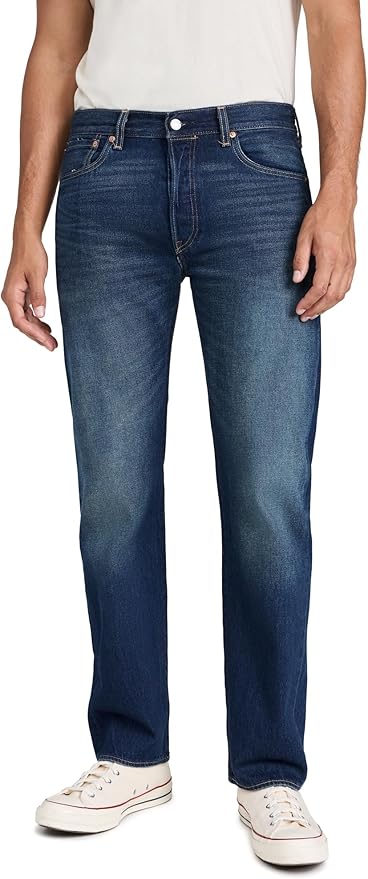
Short answer: Levi’s 501 Original Fit jeans are worth considering if you want a true straight-leg silhouette, sturdy non-stretch denim, and a style that will still look relevant years from now. The trade-offs are just as clear: the button fly takes longer to use than a zipper, rigid denim needs time to soften, and sizing deserves more attention than it does with stretch jeans.
This review explains how the men’s Levi’s 501 fits, how to choose a size, what to expect from the break-in period, and how the standard 501 Original differs from the 501 Shrink-to-Fit™. Because fabric and measurements can vary by color and product version, always check the specifications for the exact pair you select.

- Classic straight leg that sits at the waist
- Iconic button fly and five-pocket construction
- Available in multiple washes, waist sizes, inseams, and Big & Tall options
Price, availability, fabric composition, and seller may change. Confirm the details of your selected color and size before ordering.
- Levi’s 501 Original Fit review: the quick verdict
- What makes the Levi’s 501 different?
- How do Levi’s 501 jeans fit?
- Comfort and break-in period
- Quality and durability
- Pros and cons
- Who should buy Levi’s 501 Original Fit jeans?
- 501 vs. other popular Levi’s fits
- How to wash Levi’s 501 jeans
- Frequently asked questions
- Final verdict: are Levi’s 501 jeans worth it?
- Sources and review methodology
Levi’s 501 Original Fit review: the quick verdict
The Levi’s 501 is a strong choice for shoppers who prefer structure over stretch. Its regular fit through the thigh and straight leg create a balanced shape: not skinny, not baggy, and easy to wear with boots or sneakers. Classic non-stretch versions feel firm at first, then soften and develop character with wear.
| Overall verdict | A dependable heritage jean with an enduring straight fit |
|---|---|
| Fit | Sits at the waist, regular through the thigh, straight through the leg |
| Fabric | Classic versions use non-stretch cotton denim; composition can vary by wash |
| Closure | Button fly |
| Best for | Classic style, structured denim, everyday outfits, and personalized fading |
| Think twice if | You want stretch, a low rise, a slim taper, or the speed of a zipper |
What makes the Levi’s 501 different?
The 501’s appeal is not based on novelty. It comes from a recognizable combination of a waist-level rise, regular thigh, straight leg, five-pocket construction, and button fly. Levi Strauss & Co. traces the blue jean’s origin to the riveted work pants patented by Levi Strauss and Jacob Davis on May 20, 1873. The modern 501 has evolved since then, but it retains the practical, uncomplicated character that made the design influential.
That heritage matters less than the fit if you are deciding what to wear today. The straight leg gives shoes enough visual weight, the rise works well with tucked or untucked shirts, and the clean shape avoids looking tied to a short-lived trend. The result is a jean that can move from a T-shirt and sneakers to a sweater, overshirt, or casual blazer without much effort.
How do Levi’s 501 jeans fit?
The standard men’s 501 Original sits at the waist, fits regularly through the thigh, and falls straight to the hem. It is more structured than most stretch jeans and less tapered than modern slim fits. If you have been wearing low-rise or elastic denim, the higher position and firmer waistband may be the biggest adjustment.
Levi’s 501 sizing tips
- Measure your body and a pair you already own. Compare your natural waist, preferred waistband, and inseam rather than relying only on the size printed on another brand.
- Check the exact product page. Different washes and fabric treatments can feel slightly different even when the label size is the same.
- Do not expect stretch denim behavior. A rigid 100% cotton pair can relax with wear, but it will not flex like denim made with elastane.
- Choose for your thighs as well as your waist. Athletic builds may prefer the roomier Levi’s 505 Regular if the 501 feels restrictive through the seat or thigh.
- Confirm the return policy and seller. This makes it easier to exchange the jeans if the first size is not right.
On Levi’s current U.S. listing for a classic dark-wash 501 Original, customer feedback labels the fit as true to size. Treat that as a useful starting point, not a guarantee for every wash, production run, or body shape.
Standard 501 vs. 501 Shrink-to-Fit
These are not interchangeable products. The standard 501 Original is the simpler option for most buyers: select your usual measured size, then follow the care label. The 501 Original Shrink-to-Fit™ uses raw denim designed to shrink so the wearer can shape the final fit. Levi’s current Shrink-to-Fit listing notes approximately 10% shrinkage in the wash and provides separate size-up instructions.
If the listing says Shrink-to-Fit, do not apply standard 501 sizing advice. Follow the instructions for that exact product and decide whether you plan to keep it unwashed, shrink it while wearing it, or machine wash and dry it.
Comfort and break-in period
New non-stretch 501s can feel stiff, particularly at the waistband, fly, and behind the knees. That is normal for rigid cotton denim. Movement and wear gradually soften the fabric, while creases and fades become specific to the wearer.
The 501 is comfortable in a structured way: it holds its shape instead of feeling soft and elastic from day one. This is a benefit if you dislike jeans that sag after a few hours, but it can be a drawback if you commute by bike, sit for long periods, or prioritize maximum mobility. A correct size should feel secure without painful pressure, numbness, or severely restricted movement; discomfort is not a break-in strategy.
Quality and durability
The 501’s simple construction and substantial denim are central to its reputation. The straight fit also places less constant tension on seams than a skin-tight cut. Actual lifespan, however, depends on fabric weight, rotation, washing, activity level, and friction at areas such as the inner thighs and pocket edges.
Inspect a new pair before removing the tags. Check that the leg seams hang evenly, the buttons are secure, the pockets are aligned, and there are no skipped stitches or fabric defects. Manufacturing country alone is not a reliable measure of quality; inspect the individual garment and buy from a seller with clear return terms.
Pros and cons
| Pros | Cons |
|---|---|
| Timeless straight-leg silhouette | Button fly is slower than a zipper |
| Structured denim holds its shape well | Rigid versions can feel stiff at first |
| Easy to style across seasons | Less flexible than stretch denim |
| Wide range of washes, waists, and inseams | Fit and composition can vary by version |
| Develops personal fades with wear | Shrink-to-Fit requires extra sizing and care decisions |
Who should buy Levi’s 501 Original Fit jeans?
Buy the 501 if you:
- Want a classic straight leg rather than a skinny or aggressively tapered cut
- Prefer denim that feels substantial and keeps a defined shape
- Like jeans that become softer and more personal over time
- Want one versatile pair for casual and smart-casual outfits
- Do not mind a traditional button fly
Consider another fit if you:
- Need stretch for work, travel, cycling, or all-day seated comfort
- Prefer a zipper fly
- Want more room through the seat and thigh
- Prefer a lower rise or a narrow ankle opening
- Do not want to manage the special sizing of raw Shrink-to-Fit denim
501 vs. other popular Levi’s fits
| Fit | Key difference | Best for |
|---|---|---|
| 501 Original | Regular thigh, straight leg, button fly | The classic Levi’s look |
| 505 Regular | Extra room in the seat and thigh, straight leg, zip fly | More room and zipper convenience |
| 514 Straight | Regular through the seat and thigh, straight leg, zip fly | A straightforward modern straight fit |
| 512 Slim Taper | Sits below the waist and narrows toward the ankle | A cleaner, slimmer outline |
How to wash Levi’s 501 jeans
First, follow the care label sewn into your pair; it is more specific than general online advice. For a current classic non-stretch 501 listing, Levi’s recommends washing inside out with like colors in cold water and washing no more than about once every ten wears. Wash sooner when hygiene or stains require it.
- Turn the jeans inside out to reduce visible abrasion.
- Wash dark denim with similar colors, especially during early washes.
- Use cold water and avoid bleach unless the garment label says otherwise.
- Line dry if your priority is reducing fading and heat exposure.
- Treat Shrink-to-Fit denim separately and follow its dedicated instructions.
Frequently asked questions
Are Levi’s 501 jeans true to size?
Many buyers can start with their measured size, and Levi’s current classic 501 listing describes customer feedback as true to size. Rigid denim, body shape, and wash can still affect the feel. Measure first and use the size guide for the exact listing.
Do Levi’s 501 jeans shrink?
Standard pre-finished 501 Originals may change slightly with washing, especially with heat, but they are not the same as the raw 501 Shrink-to-Fit™. The dedicated Shrink-to-Fit version is designed to shrink substantially; Levi’s currently states approximately 10% shrinkage for that product.
Are Levi’s 501 jeans 100% cotton?
Many classic non-stretch 501 versions are made from 100% cotton, including the dark-wash model referenced for this review. Levi’s also sells many colors and special editions, so check the composition for the specific wash before buying.
Do all Levi’s 501 jeans have a button fly?
The button fly is a defining feature of the 501 Original. If you want a zip fly with a straight leg, compare the 505 Regular or 514 Straight.
Are Levi’s 501 jeans good for large thighs?
They have a regular fit through the thigh, but rigid denim provides little initial give. Buyers who need more space through the seat and thigh may find the 505 Regular more comfortable.
How long does it take to break in Levi’s 501 jeans?
There is no fixed timeline. The fabric, frequency of wear, activity level, and washing routine all matter. You should notice gradual softening through normal wear, but a pair that causes pain or severely restricts movement is probably the wrong size or fit.
Final verdict: are Levi’s 501 jeans worth it?
Yes—for the right buyer. The Levi’s 501 Original Fit remains a compelling everyday jean because the design is simple, versatile, and easy to recognize without being flashy. Its straight leg works across changing trends, while non-stretch denim offers structure and the opportunity to develop natural fades.
The 501 is not the universal answer. Choose a different model if stretch comfort, extra thigh room, a low rise, or a zipper is essential. If you appreciate traditional denim and take a few minutes to measure carefully, the 501 is a reliable foundation for a long-term wardrobe.
- Compare the fabric composition for your preferred wash
- Confirm whether the listing is standard or Shrink-to-Fit
- Review the seller, delivery date, and return terms before checkout
As an Amazon Associate, we may earn from qualifying purchases.
Sources and review methodology
This editorial review is based on current manufacturer specifications, official fit and care guidance, product comparisons, and the documented history of Levi’s riveted jeans. It does not claim a laboratory test or a personal wear test. Product details can change, so verify the exact listing before purchase.
- Levi’s: 501 Original Men’s Jeans—fit, composition, and care
- Levi’s Product Size Guide
- Levi’s: 501 Original Shrink-to-Fit Men’s Jeans
- Levi’s: denim washing and drying guidance
- Levi Strauss & Co.: The History of Denim
Last fact-checked: September 2, 2026.
Comments