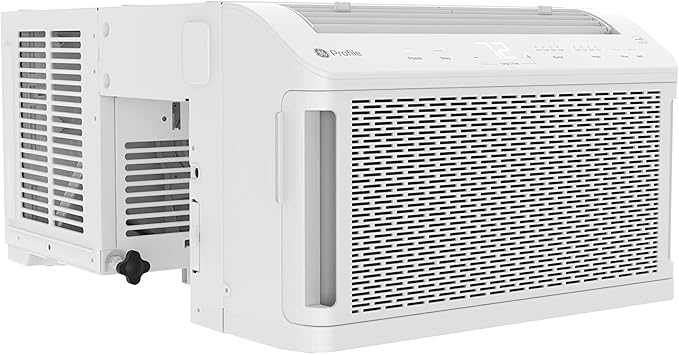

PHNT12CC Clearview Air Conditioner 12,000, Inverter Technology, Ultra Quiet, Medium Rooms up to 550 Sq. FT, Full Window View with Easy Installation, Energy-Efficient Cooling, 12200 BTU, White
- ClearView 12,200 BTU inverter window AC cools up to 550 sq ft. Energy Star efficiency, ultra-quiet 40 dB operation, and full-window view for more natural light.
- Built-in Wi-Fi with SmartHQ, Alexa & Google Assistant control. Flex-depth fits 4.5-13.75 in walls, easy install, remote, timer, and removable filter for low-maintenance comfort.
- Overall sentiment is largely positive: users praise the energy-efficient cooling, full-window design, and generally quiet operation, but a meaningful minority report noise, installation, or functionality problems.
- Most common positives: effective cooling, attractive low-profile design that preserves the window view, and perceived electricity savings; most common negatives: random loud hums, occasional defective units, and mixed installation difficulty.
- No evidence in the supplied reviews of major safety incidents or widespread recalls — complaints appear to be isolated rather than systemic — but buyers should inspect new units on arrival and keep warranty/return options available.
- Recommendation: a strong option for medium-to-large rooms and buyers who value design and efficiency — buy if you accept a small risk of needing service or a replacement, and take practical steps (measure, inspect, test) at delivery.
- Key facts: design and specs summarized so you know what you’re actually buying.
Product Overview
The product evaluated here is the refined listing: GE Profile ClearView PHNT12CC — 12,200 BTU Inverter Window Air Conditioner. According to the manufacturer description, it is an Energy Star certified inverter window AC rated at about 12,200 BTU, intended to cool rooms up to roughly 550 sq. ft. Its design highlights include a low-profile chassis that sits below the window sill to preserve a visible window area (the advertised “full window view”), an industry-exclusive flex-depth that adapts to wall thicknesses from 4.5″ to 13.75″, and built-in Wi‑Fi with SmartHQ app support plus compatibility with Amazon Alexa and Google Assistant.
Technical/fitting notes from the listing: it fits windows 20″–40″ wide, requires a minimum window opening height of about 13″ and at least 10″ from the floor. The unit is promoted as reaching as low as 40 dB in normal operation and using inverter technology to run at variable speeds for smoother, more efficient operation (the listing claims ~34% more efficient than a comparable DOE-minimum model). Included accessories: a window kit, remote, and removable filter; features include power-interruption restart and a 24-hour timer.
- Overall patterns from reviews: mostly positive on cooling and design; mixed on noise, installation, and long-term reliability.
GE Profile ClearView PHNT12CC Review: Honest Findings
Synthesizing the supplied customer data yields a nuanced picture. On core performance metrics, the unit scores well: of the customers who mentioned cooling (120 total mentions), about 71% reported positive cooling performance (85 positive vs 35 negative). Noise appears in 197 reviews (136 positive, 61 negative), so roughly 69% of noise-related comments were favorable, but the negative set is notable and consistent enough to flag. Functionality and installation are mixed: of 113 mentions of functionality, 72 were positive and 41 negative (~64% positive), and of 100 mentions of installation, 69 were positive and 31 negative (~69% positive).
The balanced takeaway is that most buyers feel the ClearView PHNT12CC delivers on the manufacturer’s claims — efficient cooling, a clean low-profile look that preserves the window view, and generally quiet operation. However, the dataset also contains recurring, reproducible complaint types (noise spikes, some DOA or malfunctioning units, occasional dents/shipping damage, and varied installation experiences) that justify a cautious purchase approach: confirm return/warranty terms, inspect the unit on arrival, and try to test it under the conditions you will use it.
- What users like most: cooling power, design that keeps the window view, perceived energy savings and quiet operation.
Positive Feedback & Highlights
The positive feedback centers on three consistent strengths. First, cooling performance: many customers report the unit cools effectively, with comments such as reaching mid‑fifties exit temperatures and eliminating hot spots across a room. The review summary explicitly notes users finding the unit “effective at cooling rooms” and even that for some it “pays for itself in electricity savings”—a direct endorsement of the energy-efficient design.
Second, the ClearView’s appearance and placement earn praise. Multiple buyers appreciate the unobstructed window view — the low-profile design is repeatedly called out as a differentiator versus traditional window units that block light and sightlines. The dataset shows a very high positive rate for “Window view” (30 mentions, all positive), and “Design” had 55 mentions of which 45 were positive, indicating strong sentiment about aesthetics and build. Users also describe the included insulating materials and window kit as high quality, reporting a tight seal and a professional look after installation.
Third, many users cite quiet operation and favorable running costs. The listing claims operation down to 40 dB and inverter technology that smooths compressor cycles; multiple customers confirmed it runs quietly in normal use and that noise is often kept outside by the design. Positive reviewers also highlight the built-in Wi‑Fi / SmartHQ app for remote control and energy monitoring, which some used to track saved electricity.
- Primary negatives identified: recurring noise spikes (random hums), mixed installation experiences, and isolated functional failures.
- No major or widespread safety rumors surfaced in the provided review set.
Negative Reviews & Rumor Analysis
The negative reports fall into a few repeatable buckets. They do not, based on the supplied material, point to a single catastrophic design flaw or a safety recall; rather they indicate a set of isolated defects and usability issues that affected a meaningful minority of buyers. Below I analyze the core complaint categories, likely causes, and practical remedies you can try.
Noise — Random Hums and Compressor Behavior
Noise is the most commonly mentioned negative. While many users call the unit quiet overall, about 61 reviewers specifically describe problematic noise (out of 197 noise mentions). Typical reports: the unit is quiet in “quiet mode” but then the compressor or condenser “kicks on” with a sudden louder sound that, for some light-sleepers, can be disruptive. Others report a recurring “random loud hum” that appears without obvious pattern. Because the ClearView places much of the mechanical mass below the window and advertises keeping sound outside, a loud intermittent hum suggests either a unit with a defective mount/insulation, a loose panel or bracket, or a compressor/fan vibrational frequency that couples into the window frame.
Practical steps: check mounting and tighten fasteners, verify the foam/insertion seals are seated (these can damp vibration), use small anti‑vibration pads or rubber washers where the unit touches the window frame, and confirm the unit is level and fully supported. If the hum persists, it could be a manufacturing defect — contact GE support or your seller for warranty service or replacement. In short, this is frequently fixable or replaceable, but it is a real complaint to consider if you need absolute silence.
Installation & Fit — Mixed Experiences
Installation reports are mixed: 69 reviewers praised ease of setup, while 31 found it difficult or requiring two people. The flex-depth design and included window kit are beneficial for a strong, sealed fit, but the unit is heavier and shaped differently than standard drop-in window AC units. The listing notes it installs with no mounting bracket in many cases (subject to local code), which explains some of the confusion — building codes, window sill strength, and single-person technique affect the experience.
Recommendations: measure your window (20″–40″ wide, minimum 13″ opening height), ensure you have another person to lift and steady the unit, and read the manual for the flex-depth adjustment procedure. If your window or wall requires extra support, add a bracket or consult a contractor. Don’t force the fit: improper mounting can increase vibration and noise.
Functionality & Reliability — Units That Stop Working
A smaller but nontrivial set of customers report functional failures — notably units that stop working or situations where the compressor does not engage (a reviewer said “High/Cool is actually nothing more than a fan. The compressor does not kick on”). Of 113 functionality mentions, 41 were negative. These reports are consistent with isolated DOA (dead on arrival) or early-life failures that occur with many types of appliances but are not evidence, by themselves, of a systemic manufacturing defect.
Troubleshooting steps before returning: confirm the unit is set to “cool” and the thermostat set lower than room temperature, verify power and breakers, try a power-cycle, and test both the onboard controls and the remote/app. If compressor never starts, that usually indicates a defective compressor/starting relay or control board — contact GE or your seller for immediate warranty service. Because these failures are real but not dominant in the dataset, buying from a seller with a strong return policy is prudent.
Shipping Damage and Physical Defects
Some reviewers received dented or physically damaged units. One user explicitly noted that they “would have given it 5 stars if it had not come in dented.” These are shipping/handling issues rather than design issues, but they are common enough to be worth noting. Inspect packaging on receipt, photograph any damage, and if the unit is compromised refuse delivery or open an immediate return claim with the retailer.
Controls, Airflow, and User Expectations
A few buyers were disappointed by airflow direction (vent vanes only move up/down, not horizontally), fan throw compared to some high-velocity “rollaround” or older window units, or the legibility of controls (white buttons on a white panel reported as hard to read). If you expect the highest possible air throw across a long room or full multi-directional louvers, this design may not match that expectation. Consider supplemental circulation (ceiling or pedestal fans) if you need broad air distribution.
Rumor Check — Safety, Recalls, and Brand Reputation
Based on the supplied reviews and summary data, there is no evidence of major safety incidents or active product-wide recalls. The negative reports center on noise, installation difficulty, DOA units, and shipping damage — not fires, off-gassing, or systematic safety hazards. That said, this analysis is limited to the provided customer content: before purchasing you may wish to quickly check the CPSC and GE/Haier support pages for the latest recall or safety notices, and confirm the seller’s return and warranty process.
- Best fit: people who want a low-profile, energy-sipping window AC for medium-large rooms and value the unobstructed window view.
- Not ideal for: buyers who require maximum raw air throw, absolute whisper-quiet operation at all times, or who cannot manage a potentially heavier install.
Who Should Consider GE Profile ClearView PHNT12CC?
This unit is a compelling option for homeowners and renters who value design and energy efficiency. It is well suited to living rooms, bedrooms, or open-plan rooms up to the manufacturer’s rated ~550 sq. ft., especially where preserving a portion of the window view is important. If you want smart-home control (SmartHQ, Alexa, Google Assistant) and want to reduce energy use relative to older window units, this model fits those priorities.
Conversely, if you need maximal airflow for industrial-style cooling, absolute silence at all times (e.g., very noise-sensitive sleepers), or a plug‑and‑play drop-in solution installed solo on an older window frame, consider alternatives or prepare for potential extra effort: bring help for installation, plan to test for noise, and confirm warranty coverage. If in doubt, select a seller with a flexible return policy or buy from a brick-and-mortar store where you can assess return/installation support.
- Final assessment: a strong, design-forward appliance with mostly positive real-world performance; worth buying if you accept the small chance of an isolated defect and follow testing safeguards.
Conclusion: Final Verdict
The GE Profile ClearView PHNT12CC presents a persuasive combination of efficient cooling, an attractive low‑profile design that preserves the view, and useful smart features — attributes that result in generally positive reviewer sentiment. The product’s downsides in the supplied dataset are real but not overwhelming: periodic reports of a random loud hum, a minority of functionality failures, and occasional shipping damage are the chief concerns.
Recommended buying approach:
- Measure your window and confirm compatibility (20″–40″ width, 13″ min opening height).
- Purchase from a seller with a clear return/exchange policy and check the manufacturer warranty; keep packaging until the unit is tested.
- Inspect on delivery (photograph any dents/damage), install with a helper, and test all modes (quiet, high, Wi‑Fi/app control) for at least 24 hours — listen for intermittent hums and verify the compressor cycles as expected.
- If you encounter persistent noise, missing compressor operation, or early failure, contact GE support and pursue warranty replacement rather than extensive DIY repair unless you are experienced.
Bottom line: if you want a solid-value, energy-efficient window AC that preserves your view and offers smart control, the ClearView PHNT12CC is worth serious consideration — but bring practical expectations about installation and the realistic (not dominant) risk of isolated defects. Inspect, test, and keep return/warranty options ready.
PHNT12CC Clearview Air Conditioner 12,000, Inverter Technology, Ultra Quiet, Medium Rooms up to 550 Sq. FT, Full Window View with Easy Installation, Energy-Efficient Cooling, 12200 BTU, White
- ClearView 12,200 BTU inverter window AC cools up to 550 sq ft. Energy Star efficiency, ultra-quiet 40 dB operation, and full-window view for more natural light.
- Built-in Wi-Fi with SmartHQ, Alexa & Google Assistant control. Flex-depth fits 4.5-13.75 in walls, easy install, remote, timer, and removable filter for low-maintenance comfort.

Comments